
Reviewed by Dr. Wael Sadek, DDS·[date pending review]
What is root canal treatment?
Root canal treatment saves a tooth whose soft inner tissue, called the pulp, is infected or badly inflamed. The dentist removes the damaged pulp, cleans and shapes the inside of the tooth's roots, then fills and seals them. The tooth stays in place. It usually needs a crown afterward to protect it.
The pulp can become infected from deep decay, a crack, repeated dental work on the same tooth, or an injury. Once the pulp is infected, it cannot heal on its own. Without treatment, the infection can spread and the tooth may be lost.
Signs you may need a root canal
- A toothache that lasts or keeps coming back.
- Pain when you bite or press on a tooth.
- Sensitivity to hot or cold that lingers after the drink or food is gone.
- A tooth that has turned darker than the teeth around it.
- Swollen or tender gums near one tooth, or a small pimple-like bump on the gum.
Sometimes there are no symptoms, and the problem is found on digital imaging during a checkup. If you have tooth pain, call as early in the day as you can and the front desk will look for the soonest time open.
What happens at the visit
- Exam and imaging. Dr. Sadek examines the tooth and uses digital imaging to see the roots and the bone around them.
- Numbing. The area is numbed so you feel pressure, not sharp pain.
- Keeping the tooth clean. A thin sheet is placed around the tooth to keep it clean and dry.
- Cleaning the canals. A small opening is made in the top of the tooth. The infected pulp is removed and the canals are cleaned and shaped.
- Filling and sealing. The canals are filled with a rubber-like material and sealed.
- Protecting the tooth. A temporary filling closes the opening. The dentist will talk with you about a final filling or a dental crown.
Some teeth take more than one visit. If a tooth has roots that need care we do not provide here, we will tell you where to go.
After your treatment
The tooth may feel tender for a few days, especially when you bite. Over-the-counter pain medicine taken as directed often helps. Until the final crown or filling is placed, avoid chewing hard or sticky food on that tooth, because a treated tooth can crack more easily.
Call us if pain or swelling gets worse, if the temporary filling comes out, or if your bite feels uneven. If you have facial swelling that spreads toward your eye or neck, a fever, or trouble breathing or swallowing, call 911 or go to an emergency room.
Cost factors
The cost depends on which tooth is treated, how many canals it has, whether it needs a crown afterward, and your insurance plan. Back teeth usually have more canals than front teeth. We accept dental insurance, so call to check whether we work with your plan. CareCredit can spread larger treatment into monthly payments. Ask for an estimate before treatment. Read about insurance and payment.
Why families choose our office
Many people feel worried when they hear the words "root canal." Dr. Wael Sadek explains what is happening inside the tooth in plain words, shows you the images, and talks through your options, including what happens if you choose not to treat the tooth. Outcomes vary, and he will tell you honestly what he expects for your tooth. He speaks English and Arabic.
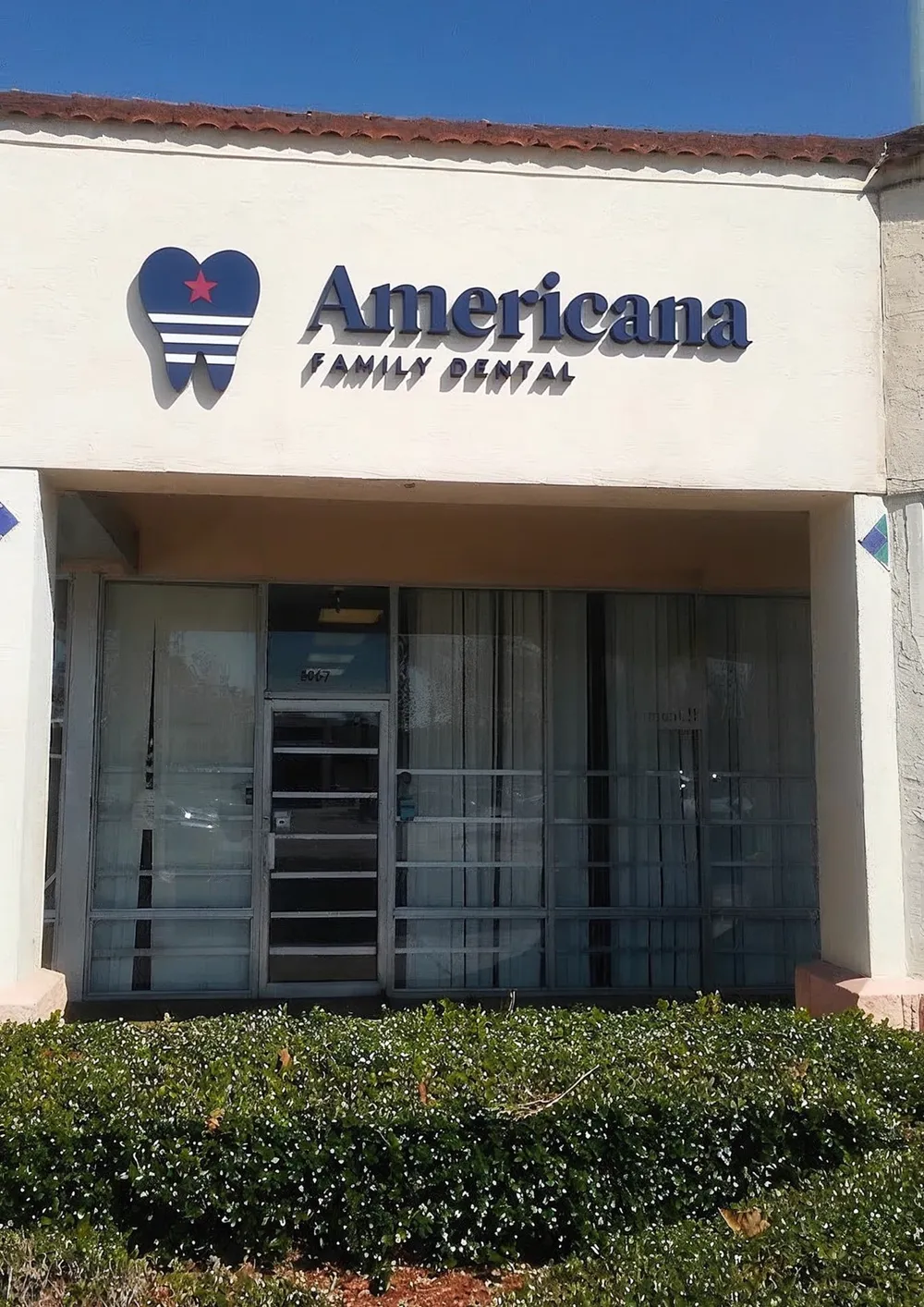
Americana Family Dental is in Americana Plaza in Orlando, with a wheelchair-accessible entrance, parking, and restroom. We are open Monday through Friday, 8 AM to 4 PM. Appointments are recommended. Call (407) 850-0133.
Questions patients ask
Does a root canal hurt?
The tooth is numbed before treatment, so most people feel pressure rather than sharp pain. Many people say the toothache that led to the root canal felt worse than the treatment. The tooth may be tender for a few days afterward, and the dentist will tell you how to manage it.
How long does a root canal take?
It depends on the tooth. Front teeth usually have one canal, while back teeth can have several. Some teeth are finished in one visit, and others need more than one. After the exam, Dr. Sadek will tell you what to expect for your tooth.
Do I need a crown after a root canal?
Often, yes, especially for back teeth that handle heavy chewing. A treated tooth can become brittle, and a crown helps protect it from cracking. Some front teeth only need a filling. The dentist will explain which option fits your tooth and why.
Is it better to pull the tooth instead?
Keeping your natural tooth is often the first choice, because a missing tooth can let other teeth shift and may need to be replaced later. Some teeth cannot be saved. The dentist will explain the pros and cons of each choice for your tooth after an exam.